
A little girl, now a woman, writes to her grandfather, wounded by a mental disorder. She watches him as he seethes inwardly, pondering the place of childhood in suffering.
In Competition
| Year of Production | 2024 |
| Language | French |
| Country of Origin | France |
| Runtime | 04:13 |
| Type | Animation, Short |
| Director | Adrien Lhoste |
| Producer | Manon Colin |
| Screenwriter | Manon Colin |
| Composer | Clément Walker-Viry |
Credits provided via FilmFreeway
Director Biography
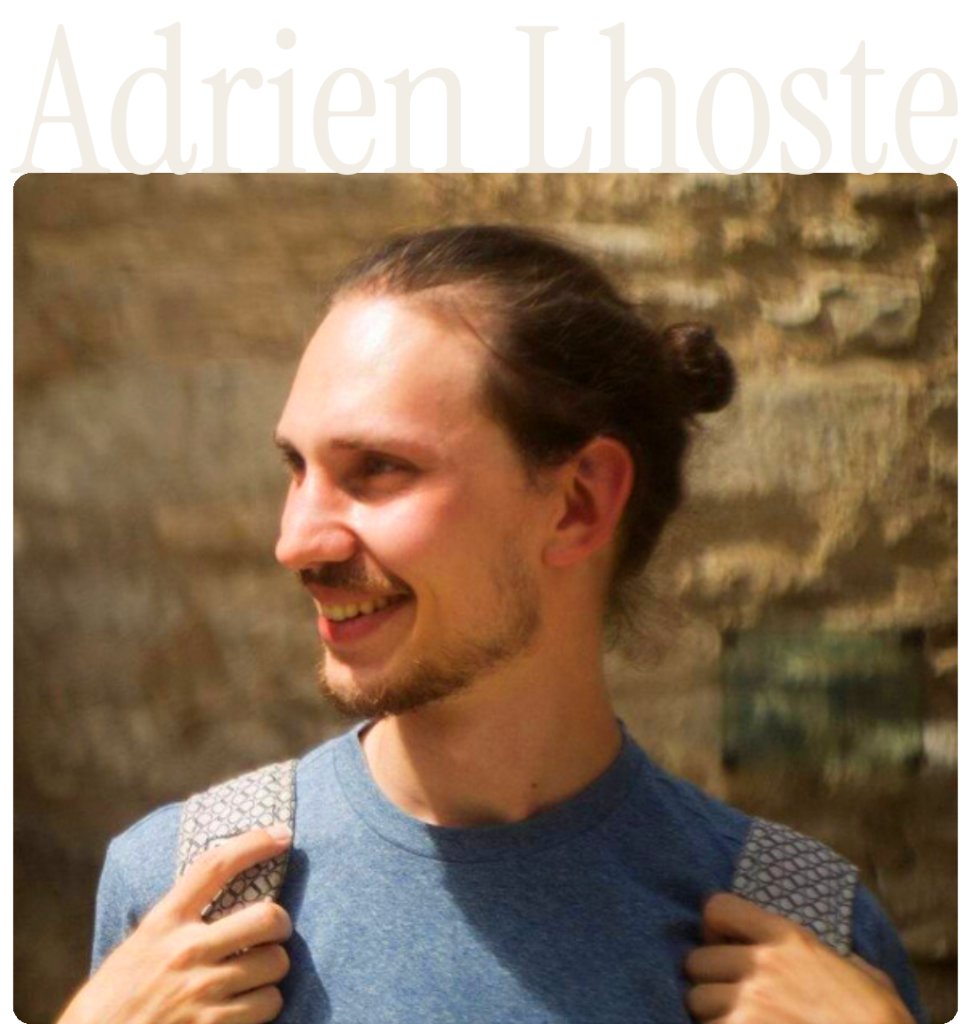
Adrien Lhoste est un réalisateur français, sortant de La Fémis.
Il réalise “Visages” en 2019 sélectionné au Festival du film Molodist à Kiev.
En 2020 puis en 2023, il crée une exposition pour l’hôtel particulier Nobu de Robert de Niro et Nobu Matsuhisa à Londres.
En 2024, il réalise “Tu n’es pas fou Papi” récompensé par le Prix du Public au Festival Arts Convergences au Musée du Quai Branly-Jacques Chirac à Paris, par le prix du meilleur court-métrage au festival Cinescale et par le prix du jury jeune au festival Regards Croisés.
Adrien Lhoste is a French film director and a graduate of La Fémis.
In 2019, he directed Visages, which was selected for the Molodist Film Festival in Kyiv.
In 2020 and again in 2023, he created an exhibition for the Nobu private mansion owned by Robert De Niro and Nobu Matsuhisa in London.
In 2024, he directed You’re Not a Fool, Grandpa, which received the Audience Award at the Arts Convergences Festival at the Musée du Quai Branly – Jacques Chirac in Paris, as well as the Best Short Film Award at the Cinescale Festival and the Young Jury Prize at the Regards Croisés Festival.
Director’s Statement
Quand j’ai lu le texte de Tu n’es pas fou Papi, j’ai tout de suite été très ému par la force et la poésie des mots de Manon Colin. Je me suis demandé quelle était la meilleure façon d’adapter ce récit.
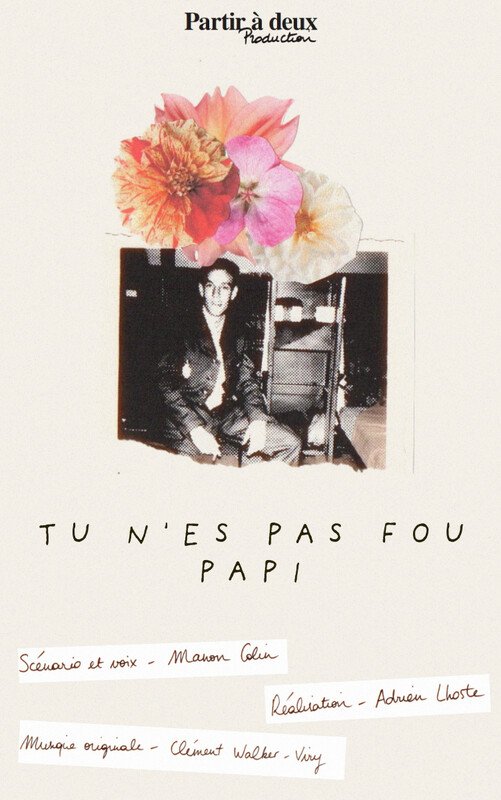
Avant toute chose, le texte brille par une authenticité certaine quand on le lit. On sent que tout est vrai et saisissant. Pour moi, il fallait absolument que l’image laisse croire au spectateur que cette femme qui lit a aussi créé les images du film. L’idée des photos découpées, des textes écrits à la main et les intentions d’étalonnage où les noirs sont décollés comme sur du papier journal contribuent à renforcer la véracité du récit.
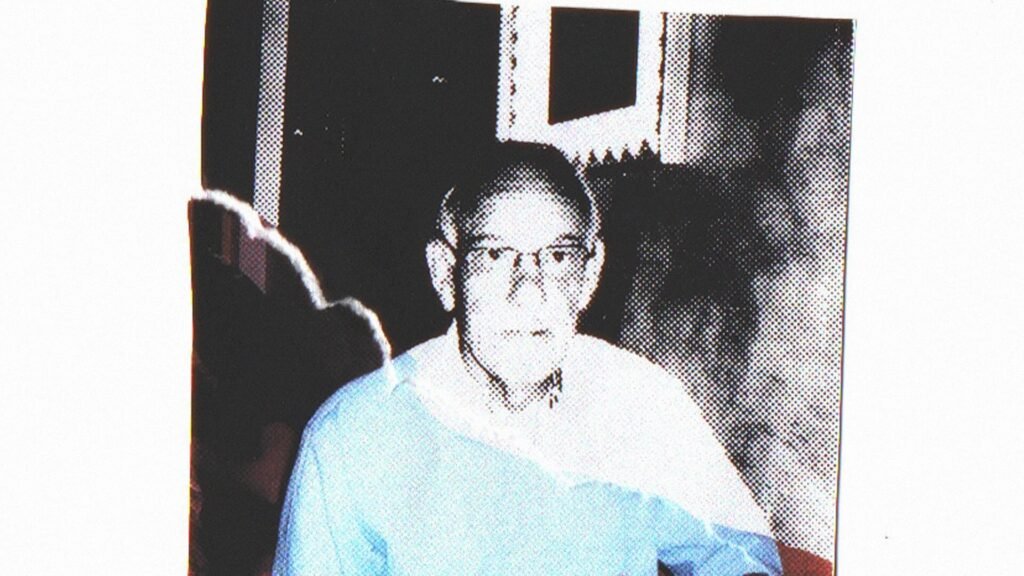
D’autre part, j’avais été beaucoup touché par l’histoire d’une famille qui peut se déchirer mais toujours s’aimer et se reconstruire malgré les épreuves que peuvent présenter un trouble psychique. Ainsi, tout au long du film apparaissent des photos déchirées qui ont été recollées. D’un côté de la photo, il y avait le monde coloré et de l’autre le visage de “Papi” qui était en noir et blanc, a peine esquissé. Cette esthétique permettait de faire ressentir au public la difficulté de vivre avec une maladie qui nous fait parfois nous sentir en dehors du monde.
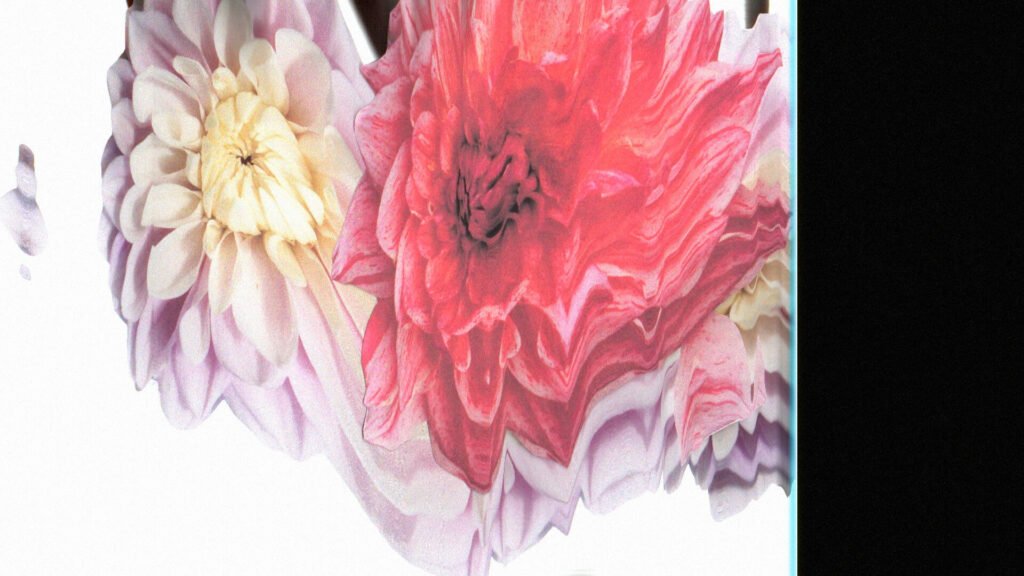
Par la suite, je me suis posé la question de la transmission d’émotions dans un format aussi court que celui de ce film : 4 minutes. Pour moi, il fallait faire appel à ce qui était le plus inconscient pour que le film puisse opérer instantanément. Ainsi, les couleurs choisies ont été pensées pour faire ressentir instantanément une émotion en se basant sur des archétypes symboliques de représentation (par exemple, les paillettes rouges décrivent la colère ou le fond rose un apaisement). De même, la musique de Clément Walker-Viry utilise des harmonies graves et prenantes pour le début du film qui se transforment au fur et à mesure vers des sonorités plus aériennes et plus de légèreté, accompagnant les ressentis du spectateur de la tristesse à la compassion.
Finalement, le plus important dans ce court-métrage était la forme de la déclaration d’amour, où chaque image, chaque son tend à faire vivre en harmonie l’émotion et la poésie.
When I read You’re Not Crazy, Grandpa, I was immediately deeply moved by the strength and poetry of Manon Colin’s words. I began to wonder what the best way to adapt this narrative might be.
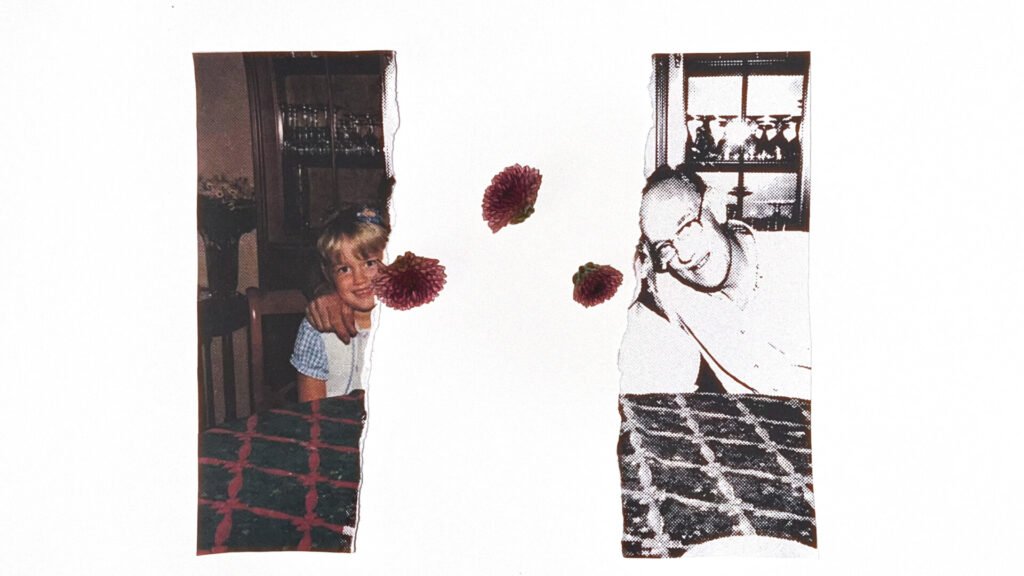
Above all, the text shines with a strong sense of authenticity when read. You can feel that everything is real and deeply affecting. For me, it was essential that the imagery make the viewer believe that the woman reading is also the one who created the film’s images. The idea of cut-out photographs, handwritten text, and the color-grading choices-where the blacks are slightly lifted, like newsprint-help to reinforce the truthfulness of the story.
I was also deeply touched by the story of a family that may fall apart, yet continues to love one another and rebuild itself despite the challenges posed by mental illness. Throughout the film, torn photographs that have been pieced back together appear repeatedly. On one side of the photo, there is a colorful world; on the other, the face of “Grandpa,” in black and white, barely sketched. This aesthetic allows the audience to feel how difficult it can be to live with an illness that sometimes makes us feel disconnected from the world.

I then reflected on how emotions could be conveyed within such a short format: a four-minute film. To me, it was necessary to appeal to the most unconscious responses in order for the film to have an immediate impact. The chosen colors were therefore designed to evoke instant emotional reactions, drawing on symbolic archetypes (for example, red glitter to express anger, or a pink background to suggest calm). Likewise, Clément Walker-Viry’s music uses deep, immersive harmonies at the beginning of the film, which gradually evolve into lighter, more ethereal sounds, guiding the viewer’s emotions from sadness toward compassion.
Ultimately, what mattered most in this short film was the form of the love letter itself, in which every image and every sound works together to harmonize emotion and poetry.